 0208 3517 101
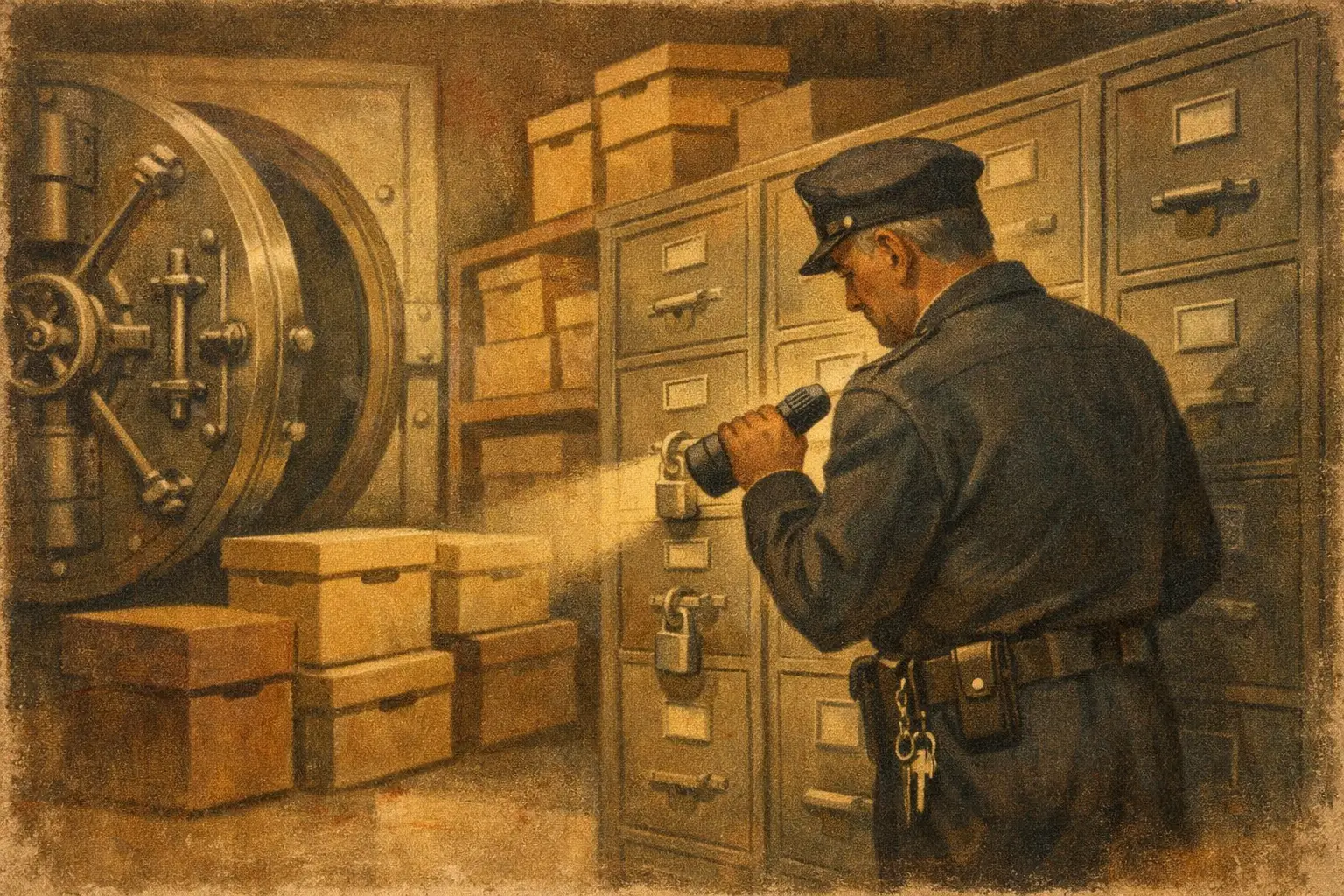
Secure Archive Storage for Business Continuity
Secure archive storage protects critical records, releases office space and supports compliance. Learn what businesses should expect from managed service.
Call us on 0208 3517 101
 ISO 9001 & 14001
Certified
ISO 9001 & 14001
Certified 4.9
Trustpilot
4.9
Trustpilot 5.0
Google Reviews
5.0
Google Reviews 195+
Trees Planted
195+
Trees Planted 25+ Years
Experience
25+ Years
ExperienceWhen an office move, refurbishment or consolidation is underway, archived records can quickly become a risk rather than an asset. Boxes of contracts, HR files, financial paperwork and legacy project documents take up valuable floor space, complicate packing plans and can be misplaced during a change programme. Secure archive storage gives businesses control of those records without leaving them exposed or inaccessible.
For facilities, operations and compliance teams, the question is not simply where to put old files. It is how to protect information, retrieve it when needed, meet retention obligations and keep the workplace focused on current activity.
What secure archive storage should deliver
Archive storage is a managed service for business records that need to be retained but do not need to remain on site. A suitable provider collects, catalogues and stores boxed documents in a controlled facility, then returns or securely destroys them in line with agreed instructions.
The value lies in the process around the storage, not just the building. A box placed in an unidentified corner of a warehouse is not an archive solution. Businesses need a clear chain of custody from collection through to retrieval, retention review and final disposal.
A well-managed service should provide a unique reference for every box, accurate inventory records and a documented handover at collection. This makes it possible to identify what has been stored, where it is held and who is authorised to request it. For sensitive files, access controls matter as much as physical protection.
Why on-site archives create avoidable pressure
Office space is expensive, particularly in London. Storage rooms are often repurposed meeting areas, crowded comms spaces or cupboards shared with stationery, cleaning supplies and IT equipment. This creates a false economy: the business retains documents at hand, but loses productive space and visibility over what it holds.
On-site files can also be difficult to manage consistently. Staff change roles, labels fade, filing systems evolve and boxes are moved without records being updated. During an office relocation, this uncertainty increases the chance of confidential documents being loaded with general contents, left behind or delivered to the wrong location.
Moving archive material into a dedicated facility can reduce that exposure. It also gives project teams a cleaner relocation plan. Current operational files can travel to the new office, while inactive records are collected separately and processed through an agreed inventory. The result is less clutter, fewer unnecessary moves and a more organised workplace from day one.
Security is more than a locked unit
Businesses should assess archive security across the full document lifecycle. Physical security at the facility is essential, but it is only one part of the control framework. The collection vehicle, handling procedures, storage location, retrieval process and destruction route all need to be considered.
A provider should be able to explain how records are collected and transferred, whether facilities have monitored access and how stored boxes are identified. Ask how access is restricted, what happens if a requested record cannot be located immediately, and how incidents are logged and escalated.
Data protection duties also apply to paper records. Personnel files, customer information, health records and commercial agreements may contain personal or confidential data. A business remains responsible for choosing suppliers that handle those materials appropriately. Clear procedures, trained staff and auditable records provide far more assurance than a general promise that documents will be kept safe.
Where a business requires certified quality and environmental management, choosing a provider with recognised systems can add confidence. ISO 9001 supports consistent service processes, while ISO 14001 demonstrates a structured approach to environmental management. Certification does not replace due diligence, but it is a useful indicator that processes are controlled and reviewed.
Build retention into the storage plan
Not every document needs to be retained for the same period. Some records are held for legal, tax, contractual or regulatory reasons; others may have only short-term operational value. Storing everything indefinitely can increase cost and create unnecessary data protection risk.
Before collection, agree a practical retention schedule. This does not need to delay the move, but it should distinguish between material that must be retained, records that can be reviewed later and documents approved for confidential destruction. Assigning a retention category to each archive series helps prevent a future clean-up becoming another large project.
The schedule should also identify the record owner. A facilities manager may coordinate storage, but finance, HR, legal or departmental leaders often decide whether material can be destroyed. Defining these responsibilities at the outset avoids unauthorised disposal and prevents boxes sitting in storage simply because nobody knows who can approve the next step.
Retrieval must work under pressure
Archives are usually quiet until they are urgently needed. An audit request, employment query, dispute or due diligence process may require a specific file at short notice. This is where accurate indexing becomes commercially important.
At a minimum, each box should carry a unique reference tied to an inventory. Depending on the volume and record type, the inventory may include department, date range, file category or a more detailed contents description. The right level of detail depends on retrieval frequency. Detailed indexing takes more preparation, but can be worthwhile for HR, legal and finance records that are likely to be requested individually.
Agree retrieval expectations before storage begins. Consider who can make requests, how authority will be verified, whether records can be returned digitally where appropriate, and what turnaround is required for standard and urgent requests. A provider that understands commercial relocation will plan these details alongside collection logistics, rather than treating them as an afterthought.
Secure archive storage during an office move
Archive management is most effective when it is built into the wider relocation programme. It should sit alongside workplace surveys, packing schedules, IT migration, furniture moves and clearance plans.
The first step is a records assessment. Identify the volume of files, their location, sensitivity and ownership. This allows the project manager to separate records for relocation, storage, destruction or review. It also ensures that archive boxes are packed and labelled to a standard that supports later retrieval.
Collection should be scheduled around operational requirements. Some departments may need ongoing access until the final move date, while others can release records earlier to free space for packing or refurbishment. A phased approach often reduces disruption and avoids staff having to make rushed decisions about documents in the final days before handover.
For organisations moving between multiple sites, a single managed provider can reduce the risk created by fragmented responsibility. Rather than coordinating one firm for removals, another for storage and a separate contractor for clearance, a project-led service creates clearer accountability. SolutionsX can integrate secure archive storage with commercial removals, packing, clearance and workplace setup, giving businesses one coordinated plan for the records that stay, move or leave the estate.
Choosing the right archive storage partner
Price matters, but the cheapest monthly rate may not represent the lowest overall risk. Businesses should compare the full service model: collection, inventory creation, storage controls, retrieval charges, retention support and confidential destruction options. A low storage fee can be offset by unclear access charges or poor record visibility.
Ask prospective providers for a straightforward explanation of their operating process. They should be able to describe collection procedures, security arrangements, box tracking, retrieval routes and destruction controls without vague language. It is also sensible to establish what support is available during a relocation, including whether a dedicated project contact will coordinate timings and exceptions.
Capacity is another consideration. A small archive may grow quickly after an acquisition, office closure or records review. The provider should be able to scale collection and storage without forcing the business to redesign its process each time volumes change.
A practical route to a more controlled workplace
Secure archive storage is not about moving paperwork out of sight. It is about making records easier to govern while releasing the office for the work that needs to happen there. With a clear inventory, controlled access, planned retention and reliable retrieval, archived documents stop being a moving-day complication and become a managed business resource.
If an office change is approaching, assess the archive early. The best time to decide what should be stored, moved or securely destroyed is before the packing crates arrive.

Get Your Free Quote Today
Fill out the form below and our team will respond within 2 hours
Reach out and we’ll
get back to you shortly.


12 Jenner Avenue Acton,
W3 6EQ London

Saturday: 9:00am – 2:00pm
Sunday: Closed