 0208 3517 101
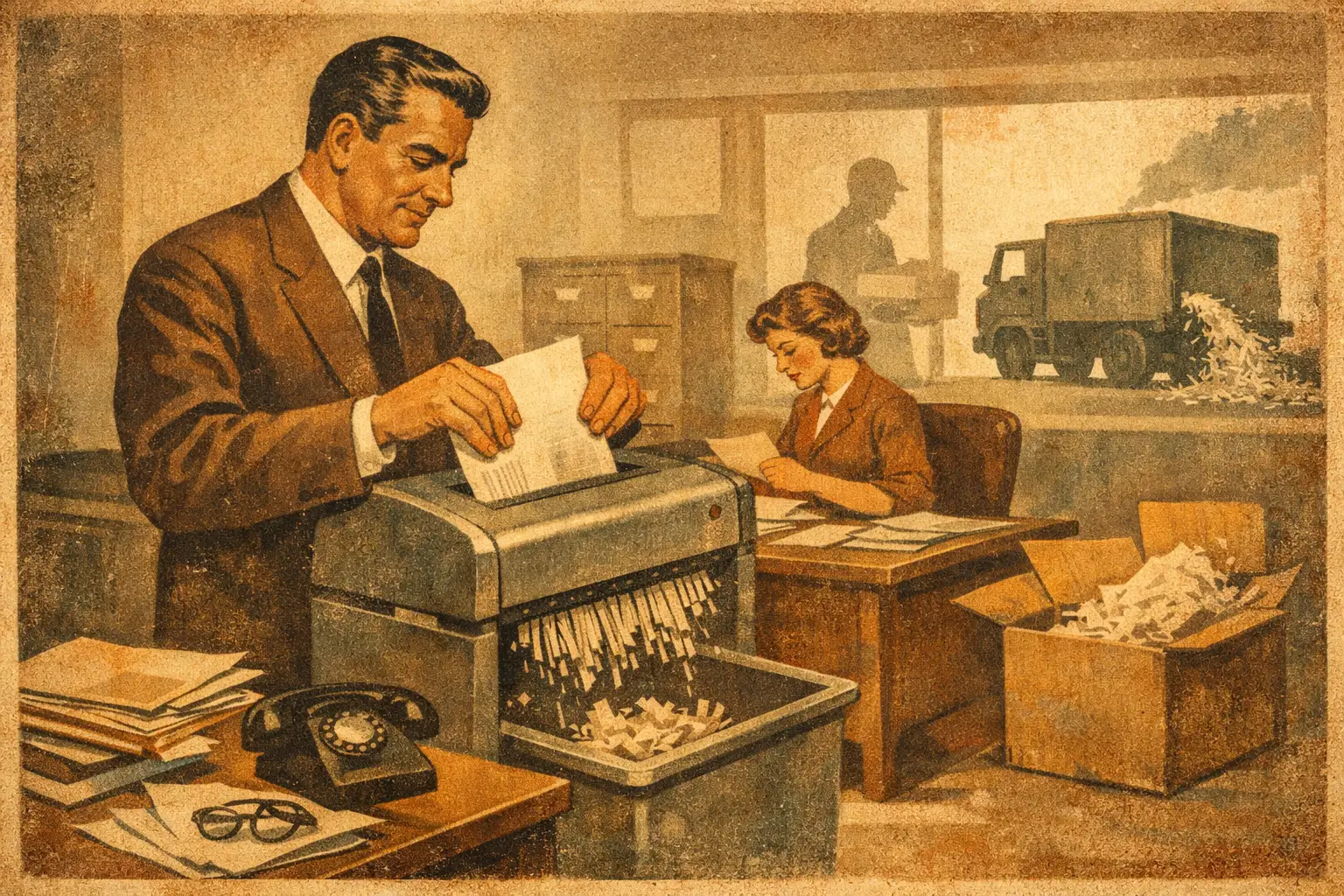
Choosing a Confidential Document Destruction Service
How to choose a confidential document destruction service that protects compliance, reduces risk and keeps your office move on track.
Call us on 0208 3517 101
 ISO 9001 & 14001
Certified
ISO 9001 & 14001
Certified 4.9
Trustpilot
4.9
Trustpilot 5.0
Google Reviews
5.0
Google Reviews 195+
Trees Planted
195+
Trees Planted 25+ Years
Experience
25+ Years
ExperienceA missed archive box is all it takes. One bundle of payroll records left in a cupboard, one file tray of client contracts loaded into general waste, and a routine office clear-out becomes a data protection problem. For businesses planning a move, refurbishment or consolidation, a confidential document destruction service is not an optional extra. It is part of risk control.
Paper records still sit behind many day-to-day operations, even in businesses with a strong digital workflow. HR files, finance paperwork, signed agreements, medical information, legal correspondence and printed reports can all hold personal, commercial or regulated data. When those documents are no longer needed, they must be destroyed in a way that is secure, auditable and practical.
Why businesses use a confidential document destruction service
The core issue is simple. Throwing sensitive paperwork into mixed recycling or general waste is not secure disposal. It creates avoidable exposure for the business, the people named in those records and the teams responsible for compliance.
A professional confidential document destruction service provides a controlled process from collection through to destruction. That usually includes secure consoles or sacks, scheduled or ad hoc collections, chain of custody procedures and certification once destruction has taken place. For businesses, the value is not just shredding. It is accountability.
That matters even more during workplace change. Office relocations, floor reconfigurations and storage clearances tend to uncover years of retained paperwork. Some of it still needs to be kept. Some of it can be archived elsewhere. Some of it should have been destroyed months or years ago. Without a clear plan, confidential material can easily get mixed into packing, disposal or recycling streams.
Where document destruction fits into office moves
For office managers and project leads, confidential waste often appears late in the process. The main move plan covers furniture, IT equipment, crate hire, labelling and reinstatement works. Then someone opens a store room and finds six filing cabinets, archive boxes under desks and a locked cupboard that nobody has reviewed in years.
This is where delays start. Teams pause to decide what can be moved, what needs to be retained and what should be destroyed. If those decisions happen on move week, they create pressure on packing teams and increase the chance of mistakes.
The better approach is to treat document destruction as part of the move scope from the outset. A structured pre-move review can identify paper records by category, retention needs and disposal priority. That reduces volume before relocation, cuts transport and storage costs, and keeps confidential material under control.
For multi-site organisations, this can have an even bigger operational benefit. Instead of moving obsolete files between offices or into paid storage, the business can reduce paper holdings before the relocation programme begins.
What a secure service should include
Not every provider offers the same level of control. For a business handling personal data, financial records or commercially sensitive information, the process matters as much as the end result.
A reliable confidential document destruction service should start with secure containment. That may involve locked bins, tamper-resistant sacks or sealed collections direct from archive rooms and offices. The key point is that documents are protected before they leave your premises, not simply gathered into open boxes and taken away.
Collection procedures should also be clear. You need to know who is handling the material, when it is being removed and how it is being transported. For many organisations, a certificate of destruction is a minimum requirement because it provides a record that disposal has been completed.
There is also a practical difference between routine and project-based destruction. Routine services suit businesses with ongoing paper disposal needs. Project-based clearance is often better for relocations, office closures, storage reviews or post-merger consolidations where large volumes need to be dealt with quickly. The right option depends on your paper volume, internal controls and the pace of the wider workplace project.
Compliance is only part of the decision
Compliance is often the first reason businesses look for secure destruction, but it should not be the only one. Operational efficiency matters as well.
If your team is boxing confidential files, arranging separate collections and managing multiple contractors during a move, every extra handover adds time and risk. A provider that can coordinate document destruction alongside wider relocation, storage or clearance services will usually create a cleaner project plan. Fewer suppliers means fewer site visits, fewer scheduling conflicts and fewer grey areas over responsibility.
That does not mean one supplier is always the right answer. In some highly regulated sectors, businesses may prefer a specialist destruction provider working alongside a relocation partner. The point is to make that decision deliberately, not by default. If several contractors are involved, roles and custody points need to be clear.
Questions to ask before appointing a provider
The strongest suppliers tend to answer practical questions quickly and without vagueness. How is confidential material stored before collection? What is the collection process on site? Is destruction carried out securely and can it be evidenced? Can the service scale for a one-off office closure as well as regular collections? What happens if large volumes are found unexpectedly during a move?
You should also look at broader operational standards. Businesses moving offices are rarely buying document destruction in isolation. They are managing timelines, landlord obligations, IT dependencies, staff communication and business continuity. A provider that understands live commercial environments will usually handle collections with less disruption and better site discipline.
Certifications, process transparency and experience in occupied offices all help. So does a clear scope. Pricing should reflect the service required, not hide uncertainty behind loose estimates.
Common mistakes that increase risk
One of the most common mistakes is leaving the review too late. Businesses often underestimate how much paper they still hold until packing begins. That creates rushed decisions and increases the chance that confidential records are moved unnecessarily or disposed of incorrectly.
Another issue is assuming all old paperwork can be destroyed immediately. Retention obligations vary by document type, sector and business function. Finance, legal and HR records may need to be kept for specific periods. Destruction should follow a retention policy, not just a need to clear space.
A third mistake is separating document disposal from the rest of the project. If the move team, facilities lead and records owner are not aligned, boxes can be mislabelled, duplicated in storage or missed altogether. Secure destruction works best when it is built into the move programme, not treated as a last-minute tidy-up exercise.
The case for early planning
Early planning gives you options. It allows department heads to review records properly, identify what must be retained and remove what no longer serves the business. It also gives your relocation team a clearer picture of what is actually being moved.
That has a direct cost impact. Every unnecessary box adds handling, transport and potentially storage spend. More importantly, every unnecessary confidential file increases the volume of sensitive material in circulation during the move.
For businesses with a zero-downtime mindset, planning ahead also protects productivity. Staff are not pulled into emergency file sorting during the final week. Meeting rooms do not become temporary paper holding areas. Move day remains focused on critical operations rather than avoidable admin.
This is where a coordinated provider can add real value. SolutionsX, for example, works with businesses that need relocation, clearance and operational control managed as one project rather than split across disconnected services. That joined-up approach is often what keeps timelines realistic and risk contained.
Confidential document destruction service as part of business continuity
The most effective business moves are the ones that remove friction before it appears. Secure document disposal is a good example. On paper, it may look like a minor line item compared with IT migration or furniture installation. In practice, it touches compliance, cost control, space planning and reputational risk.
A confidential document destruction service should therefore be judged on more than whether papers are shredded. It should be assessed on whether the provider can maintain custody, support audit requirements, respond to project pressures and fit into the wider logistics of workplace change.
For office managers, operations leads and procurement teams, that usually means choosing a service that is secure, documented and easy to integrate. The right process reduces paper volume, keeps sensitive information out of the wrong hands and removes one more source of disruption from an already complex project.
If your business is planning a move, closure or office reorganisation, review your paper records before the packing starts. The easiest confidential file to manage on move day is the one that was securely destroyed weeks earlier.
More News From Us
Get Your Free Quote Today
Fill out the form below and our team will respond within 2 hours
Reach out and we’ll
get back to you shortly.


12 Jenner Avenue Acton,
W3 6EQ London

Saturday: 9:00am – 2:00pm
Sunday: Closed